FLASH Restoration and thermal baking use two different workflows: controlled fluid-based cleaning with restriction testing versus staged heating, cooling and compressed-air ash removal.
FLASH Restoration uses controlled fluid circulation and air-pressure pulses to loosen and remove removable soot and non-combustible ash from eligible components. Thermal cleaning uses staged heating, cooling and compressed-air cleaning.
FLASH RESTORATION PROCESS
VS
Thermal Baking Oven
FLASH Restoration
DPF BOX Specialty
01
InspectionThe component is checked for visible damage, contamination and service eligibility.
02
Controlled CleaningFluid circulation and air-pressure pulses loosen and remove accumulated soot and non-combustible ash from eligible channels.
03
Restriction TestingPre-cleaning and post-cleaning restriction readings are compared on a flow bench.
04
Documented ResultThe component is returned with recorded findings and relevant condition notes.
Many eligible filters can be processed in approximately two hours.
Thermal Cleaning
Comparative Method
01
Initial Air CleaningSome systems use compressed-air pulse cleaning before heating to purge loose particulate.
02
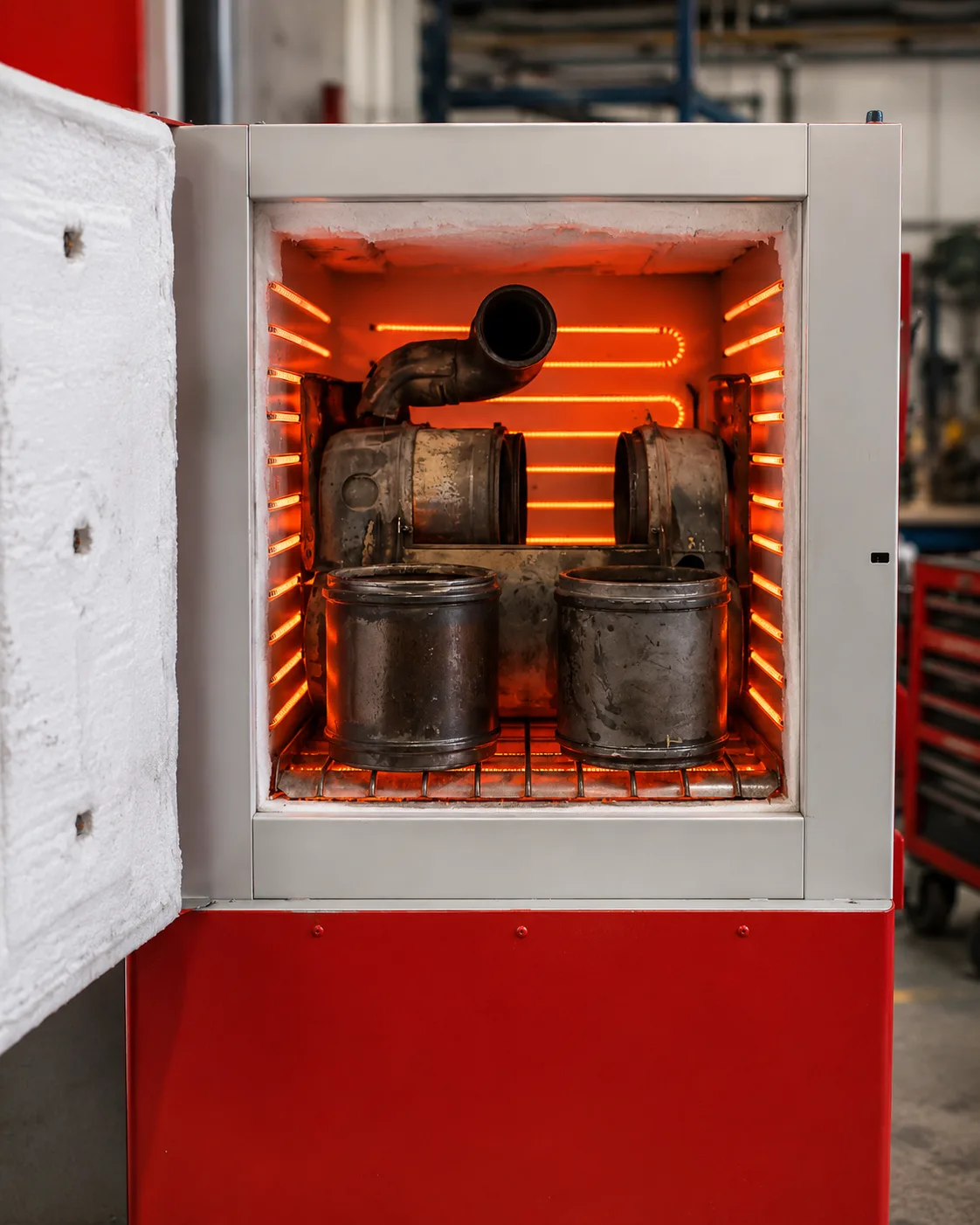
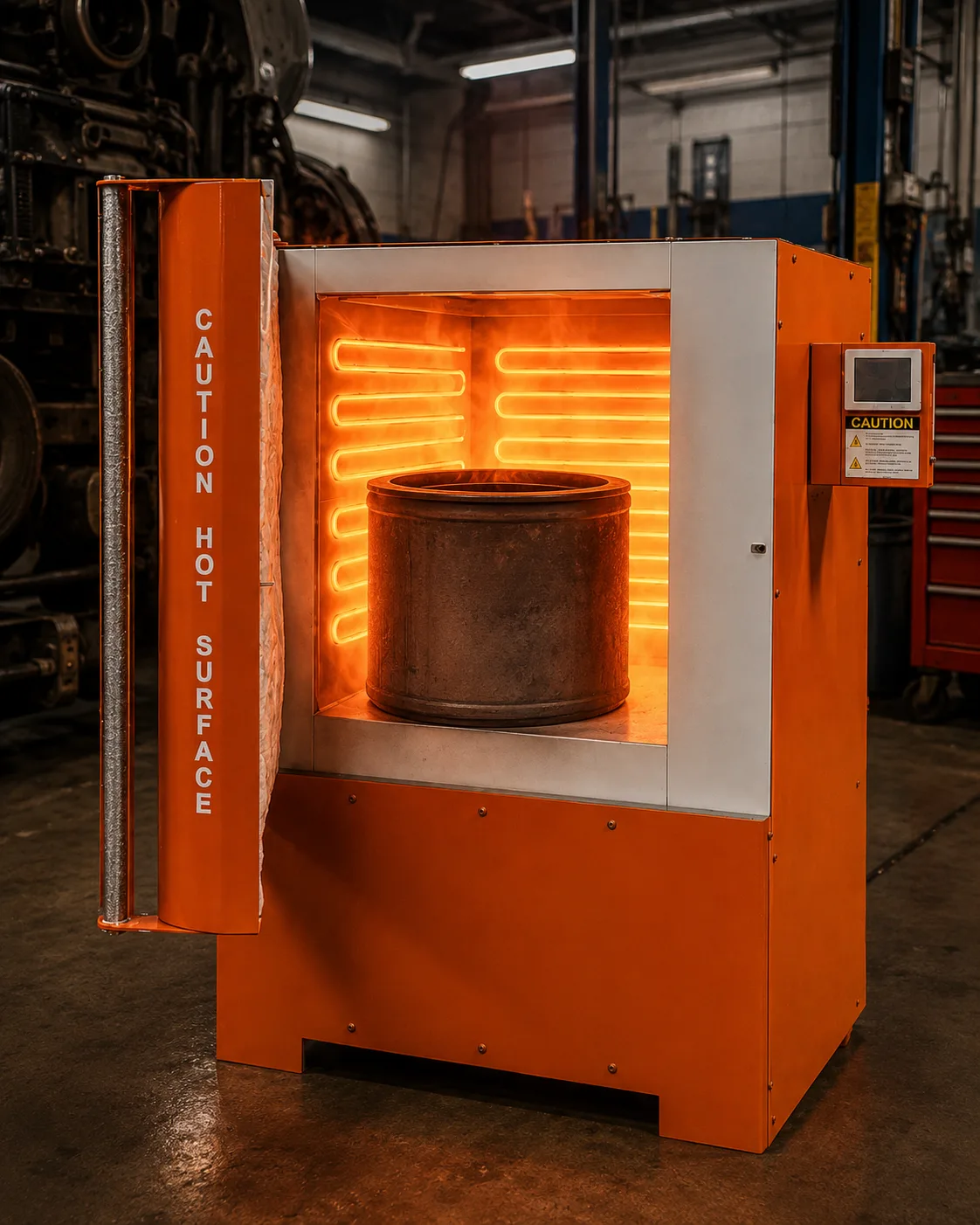
Controlled HeatingA programmed kiln cycle oxidizes residual soot and unburned hydrocarbons at high temperatures.
03
Cooling StageThe filter undergoes a controlled cool-down period before manual handling.
04
Final Air CleaningThe cooled filter may be pulse-cleaned again with compressed air to remove released ash deposits.
Total turnaround depends on equipment, cycle duration and provider workflow.
Practical Comparison
FLASH Restoration vs Thermal Baking: Key Differences
Technical Criteria
FLASH Restoration
DPF BOX Specialty
Thermal Baking
Comparative Method
Ash Removal
Uses controlled fluid circulation and air-pressure pulses to loosen and remove removable soot and non-combustible ash from eligible channels.
Thermal heating oxidizes residual soot, while non-combustible ash must be removed through compressed-air pulse cleaning.
Heat Exposure
No extreme thermal cycles: Operates without subjecting ceramic monoliths to high heat.
Requires controlled temperature ramp-up and cool-down; damaged substrates may be unsuitable.
Turnaround
~2 Hours: Many eligible filters can be completed same-day in approximately two hours.
Often Longer Turnaround: Total time depends on equipment, cycle duration and provider workflow.
Verification
Integrated flow bench restriction readings before and after restoration.
Backpressure or weight differential testing depending on shop equipment.
Service Limitations
Unsuitable for filters with internal cracks, melted substrate, or severe housing damage.
Thermal cleaning requires a structurally intact substrate. Heavily oil- or fuel-contaminated components may be unsuitable for thermal processing.
Thermal Kiln Process
Thermal Workflow
Why Thermal DPF Cleaning Requires Multiple Stages
Thermal cleaning oxidizes soot and hydrocarbon residue during a controlled heating cycle. Mineral ash does not burn away, so a complete workflow may also require pre-cleaning, controlled cooling and final compressed-air removal.
Stage 01Pre-Cleaning
Loose ash and surface contamination may be blown out with compressed air prior to heating.
Stage 02Heating Cycle
Programmed kiln temperature cycles oxidize residual soot and hydrocarbon deposits into ash.
Stage 03Controlled Cooling Stage
The filter undergoes a controlled cool-down period to prevent thermal shock before handling.
Stage 04Final Ash Removal
Additional pneumatic pulse cleaning is required after baking to blow out the oxidized ash deposits.
Workflow Consideration: Equipment-specific cycle times vary. For example, the official Donaldson thermal regenerator manual specifies a seven-hour heating and cooling cycle before final pulse cleaning—illustrating why thermal workflows generally require more processing stages than FLASH Restoration.
DPF BOX Service Method
Why DPF BOX Specializes in FLASH Restoration
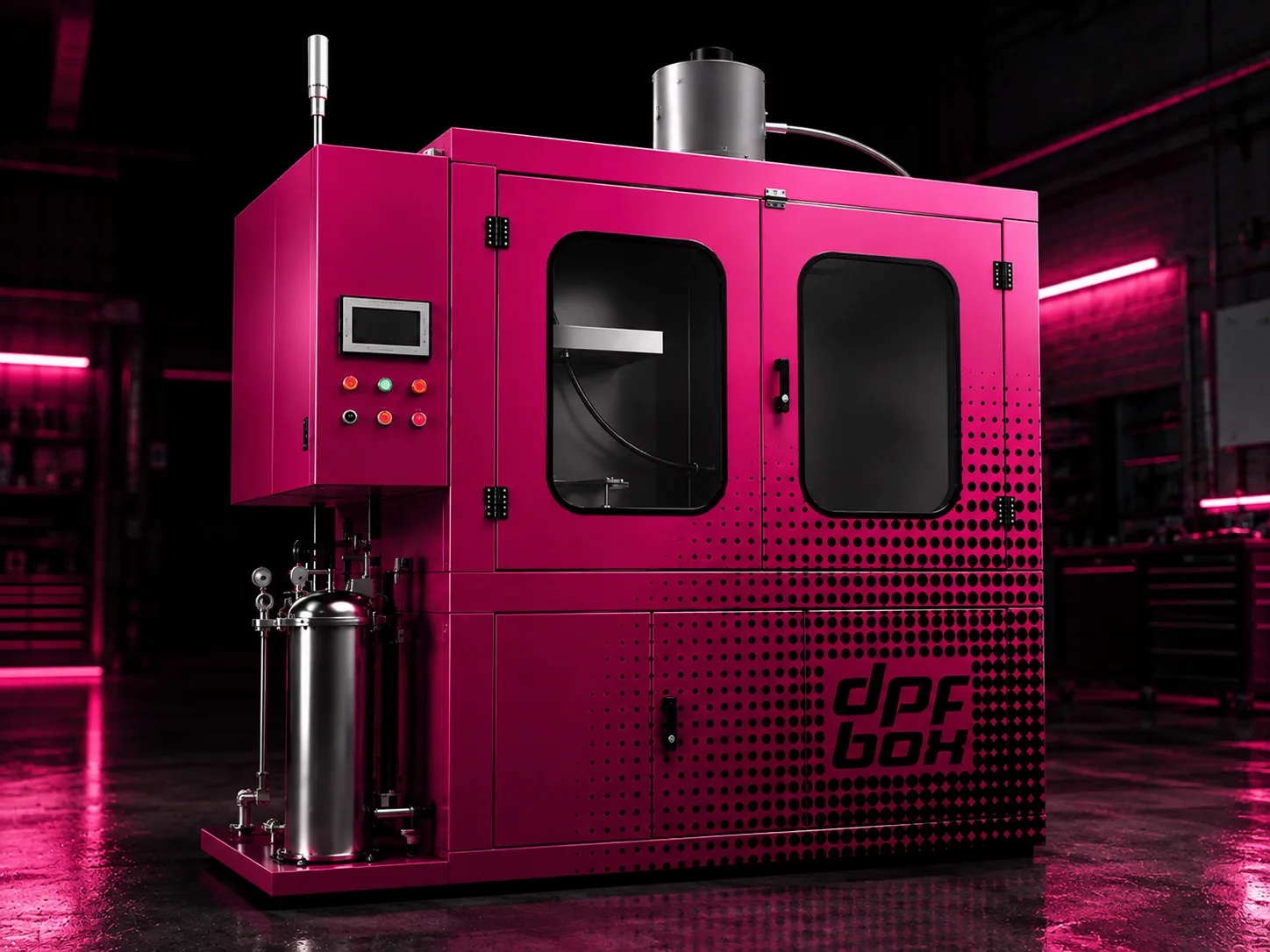
DPF BOX uses FLASH Restoration because it combines controlled fluid-based cleaning with documented restriction testing in a workflow designed for commercial turnaround. For eligible components, the process helps remove removable soot and non-combustible ash without relying on a prolonged kiln cycle.
FLASH RESTORATION PROCESS
DPF BOX Restoration Systems
Closed-loop equipment designed to minimize unnecessary substrate stress.
Commercial Turnaround
Many eligible filters can be processed in approximately two hours, subject to component condition and current workload.
Physical Ash Removal
Controlled fluid circulation helps loosen and remove non-combustible ash that cannot be burned away through regeneration.
Restriction Testing
Pre-cleaning and post-cleaning restriction readings are compared on a flow bench before the filter is returned.
Inspection Before Service
Cracked, melted, heavily oil-saturated or structurally damaged components may be unsuitable for cleaning.
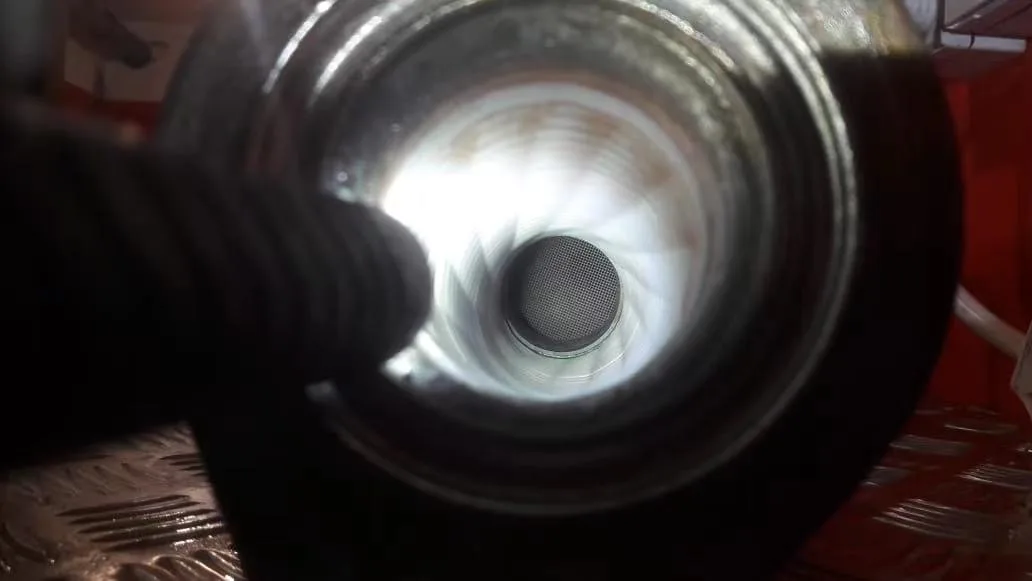
A loaded filter can contain far more than surface soot. The dark discharge visible in this real DPF BOX service footage includes loose soot, compacted ash and accumulated contamination being removed from eligible channels during the FLASH Restoration process.
Visible Contamination Removal
See soot and suspended deposits leave the component during cleaning.
Internal Channel Access
Controlled circulation is intended to reach restricted internal passages, not only the visible filter face.
Pre/Post Restriction Verification
Restriction readings are measured and compared on a flow bench before and after service.
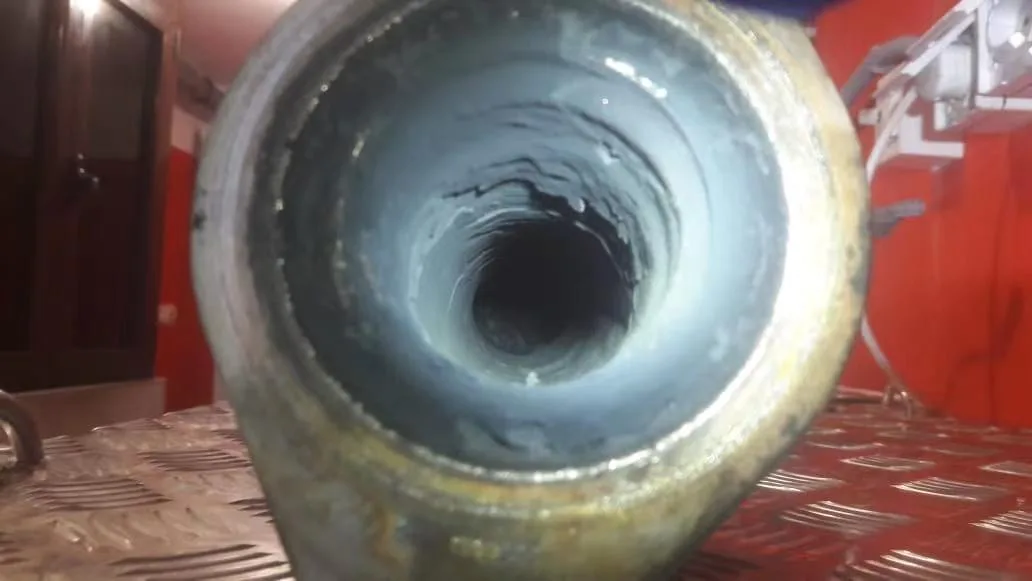
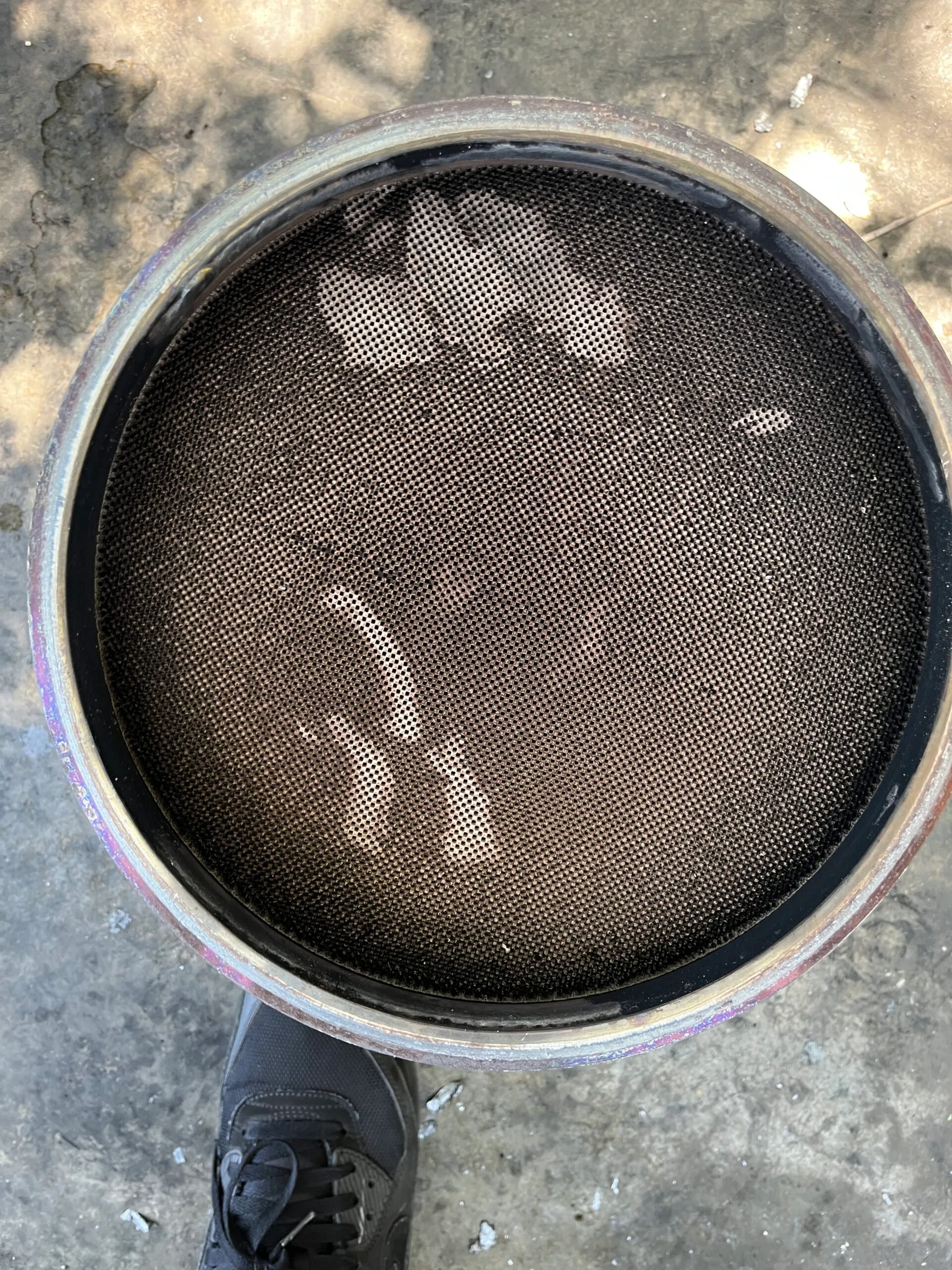
Heavy internal buildup compared with the same passage after controlled cleaning. Drag the slider to inspect the result.
BEFORE — RESTRICTED
AFTER — FLASH CLEANING
Drag or move cursor across image to compare passage
Heavy Contamination
Internal surfaces with visible accumulated soot and deposit buildup before before FLASH Restoration.
Visibly Cleaner Surface
Visibly cleaner internal passage following controlled fluid cleaning.
Technical Note: Visual condition is only one part of the service result. Final assessment also depends on flow bench restriction testing and ceramic substrate condition.
Service Eligibility
Cleaning Can Remove Restriction. It Cannot Repair Structural Damage.
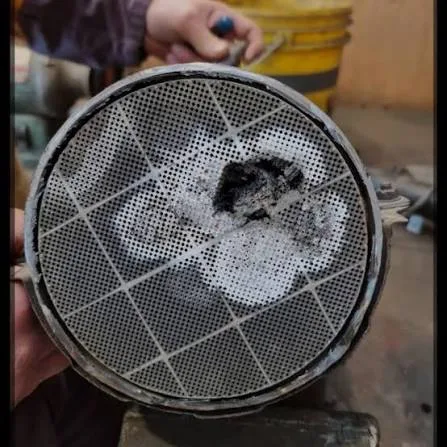
Every filter undergoes an initial physical inspection before processing. If the ceramic substrate is intact and removable contamination is causing the restriction, FLASH Restoration may significantly reduce excessive backpressure. However, damaged or melted substrates cannot be restored by any cleaning method.
Eligible For FLASH
Cleaning May Be Appropriate
Serviceable Contamination
Soot and non-combustible ash accumulation
Intact ceramic monolith substrate without fractures
No visible thermal melting or major channel cracking
Component passes initial physical inspection
Backpressure is caused by removable contamination
Unsuitable / Red Flag
Replacement May Be Required
Structural Damage
Melted, burned or heat-distorted channels
Cracked ceramic core or internal cell wall failure
Severe engine oil saturation or coolant contamination
Structural collapse of internal filter housing
Chemically degraded catalyst coating (SCR/DOC)
Keep the Truck Moving
Confirm Whether Your DPF Can Be Restored
Send your truck, engine and component details to DPF BOX. We will confirm service eligibility, current turnaround and estimated pricing before work begins.

 Eligible For FLASH